


Foundation: Galactic Frontier
4.11.87K Reviews
App Specs
- Version
- 1.1.155.240733
- Updated On
- License
- Free
- Downloads
- 1,000,000+
- Developer
- FunPlus International AG
- Categories
- Strategy
- Platform
- Android, iOS
Screenshots
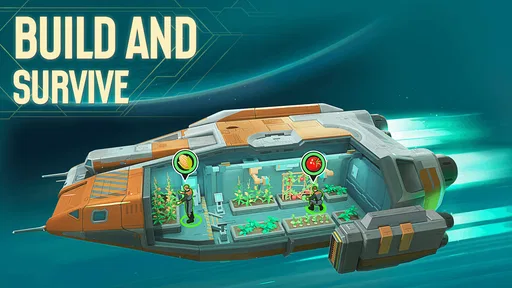

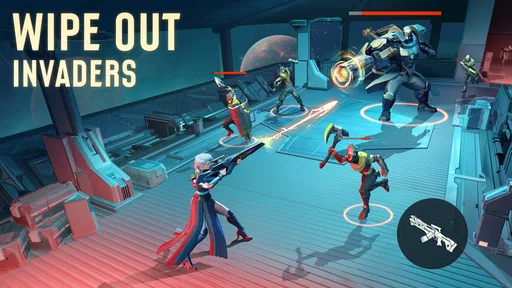

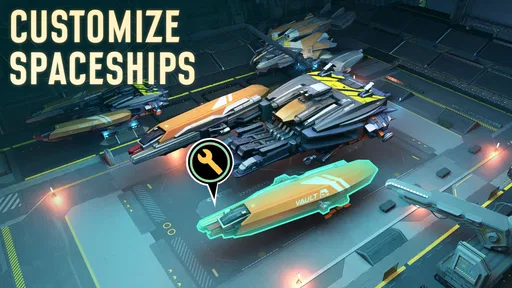
 Analysis by AppCompare
I enjoy space strategy most when its big setting gives my decisions a purpose, rather than simply dressing up routine resource collection. Foundation: Galactic Frontier aims for that mix: a science-fiction saga wrapped around empire management, exploration, and conflict. Its appeal is strongest when you want a continuing galaxy to think about between play sessions; it is less convincing if you want a self-contained story or quick action with little planning.
That distinction matters because strategy games can ask for very different kinds of attention. Some focus on compact tactical battles, while others build around long-term expansion and player communities. This one leans toward the latter. I would approach it as a developing campaign that rewards patience and deliberate choices, not as a short burst of battles that wraps up neatly in one sitting.
My practical advice is to judge the early experience by whether you enjoy making small decisions that support a larger plan. If assigning resources, weighing research priorities, and keeping an eye on relationships sounds satisfying, the format has room to grow on you. If those tasks feel like chores before the story gets moving, a more mission-based strategy game may suit you better.
The Galactic Setting
First things first, the setting. Imagine sprawling galaxies, each with its own set of planets waiting to be explored, conquered, or allied with. The game kicks off by dropping you smack in the middle of a galactic struggle, and it’s up to you to navigate the interstellar politics, warfare, and trade. The graphics are pretty stellar, pun intended, with vibrant visuals that make each planet feel alive and unique.
What I really appreciate is the depth of the lore. The narrative is rich, filled with ancient alien civilizations, hidden technologies, and mysterious galactic phenomena. It’s like reading a space opera novel, but you get to be the main character calling the shots.
Making the strategy work for you
Because this is an ongoing strategy experience, I find it helps to play with a small goal in mind rather than trying to optimize everything at once. Decide what you want your next stretch of play to accomplish, then let that guide which resources and research deserve attention. That makes progress easier to follow and helps prevent every available task from feeling equally urgent.
A useful habit is to pause before spending scarce resources on an immediate upgrade and ask whether it supports the next thing you actually want to do. A stronger fleet may matter if conflict is your priority; a different investment may make more sense if you are concentrating on growth or research. The important trade-off is not that one route is always superior, but that spreading effort too thin can make each route feel slow.
Worth Reading Before You Choose

Baby Panda World Brings Quick Play to Modern Phones, but Its Game Library Feels Busy

ESPN’s Live Game View Makes Following Close Games Easier

QuizzLand Review: A Good Fit for Short Trivia Breaks, Not Every Player

Basketball Stars: Multiplayer Is Fast, but Can It Recover When Matches Go Wrong?

WEBTOON Turns Phone Updates Into a Better Reading Routine

Link to Windows Runs on Shared Habits, Not Social Feeds
This style also suits short, regular visits better than an occasional marathon for players who like to keep their plans in view. When you return, check what is already underway before launching another goal. That simple sequence—review, choose one priority, then act—keeps a broad strategy game manageable on a phone and gives each session a clearer purpose.
Gameplay Mechanics
Now, let’s talk gameplay. Foundation: Galactic Frontier is a strategy game at its core. You’ll spend your time building up your fleet, managing resources, and making strategic decisions that affect your empire’s standing in the galaxy. The learning curve is just right — challenging enough to keep you engaged but not so complex that you feel overwhelmed.
One of my favorite features is the alliance system. You can team up with other players to form coalitions, which adds a nice social element to the game. Whether you’re negotiating peace treaties or planning joint attacks, the multiplayer aspect enhances the overall experience.
Where alliances change the experience
The social side is best treated as a commitment, not a button you press only when you need help. Before joining a coalition, consider whether you want other people’s plans to influence your own schedule and priorities. A group can make a large galaxy feel less solitary and give cooperation a concrete purpose, but it can also make the experience less comfortable for someone who prefers to play entirely at their own pace.
If you do play with others, go in with one clear question: what kind of participation will feel enjoyable to you? You might prefer discussing plans and coordinating when you are available, rather than trying to follow every development. This is a useful way to decide whether the multiplayer layer adds camaraderie or turns a relaxing strategy game into another obligation.
Compared with a typical single-player tactics game, the alliance element shifts some of the appeal away from tightly scripted encounters and toward relationships and shared decisions. Compared with a purely competitive strategy title, cooperation gives you another way to engage with the galaxy. That flexibility is a strength, though anyone seeking a completely private campaign should treat the social side as a meaningful difference, not a minor extra.
Resource Management
Managing resources is crucial here. You’ll need to balance mining operations, trading, and technological research. It’s a bit like juggling, but once you get the hang of it, it’s incredibly satisfying to watch your empire thrive. The game does a great job of rewarding strategic planning and foresight.
For an everyday routine, I would fit play around a moment when I can make a couple of considered choices rather than opening the game while distracted and tapping through everything. For example, after dinner, I might check what my current plan needs, make a focused adjustment, and leave the next decision for another visit. The point is not to turn play into a rigid schedule; it is to avoid spending resources impulsively simply because they are available.
That approach is especially helpful if you are deciding whether the game fits your phone habits. If you want every session to deliver a complete story chapter or a decisive battle, long-term management may feel diffuse. If you enjoy returning to a project and seeing how earlier choices shape the next step, the resource layer gives you a reason to come back without demanding that every visit be dramatic.
The Challenges
Of course, it’s not all smooth sailing. The galaxy is teeming with threats, from hostile alien races to rogue AI fleets. Each encounter requires quick thinking and adaptability. I’ve had a couple of heart-stopping moments where a seemingly insignificant decision had massive consequences down the line. It keeps you on your toes, and I love it!
The main friction is the same quality that gives the game its strategic appeal: consequences can take time to become clear. If a plan goes poorly, you may have to adjust several priorities rather than fix everything with one clever move. I would not recommend treating every setback as a signal to spend or change course immediately. First work out whether the problem is a temporary obstacle or the result of a plan that no longer matches your goals.
That makes it a weaker fit for players who want fast, repeatable tactical matches with a clean finish after each round. A compact turn-based game is a better choice if you mainly want to test a strategy, see the outcome, and start fresh. Here, the attraction is more about living with decisions across a broader galactic campaign, and that can feel less direct when you have only a few minutes to play.
Immersive Sound and Visuals
The developers have nailed the audio-visual experience. The soundtrack is epic, with orchestral scores that perfectly match the grandeur of your interstellar adventures. The sound effects, from the hum of your starships to the distant explosions of space battles, add layers of immersion.
Visually, the game is a treat. The attention to detail is impressive, from the sleek design of the starships to the diverse landscapes of each planet. Whether you’re in the middle of a fierce battle or exploring a new world, the graphics make it all feel incredibly real.
Who is likely to enjoy it?
I would recommend it first to players who like science-fiction worldbuilding and are happy to pair that atmosphere with ongoing strategic decisions. It should also appeal to people who enjoy coordinating with other players, provided they are comfortable with the social dimension shaping part of their experience. The story and setting give the planning a sense of place, while the empire-building angle offers more to consider than simply choosing a move in a self-contained battle.
I would steer away if you need a campaign that can be completed in short, clearly bounded chapters, or if resource management is the part of strategy games you usually tolerate rather than enjoy. It is also not the obvious choice for someone who dislikes multiplayer interaction. In those cases, a single-player narrative strategy game or a focused tactical title would likely be a better match than trying to make this galaxy fit a different play style.
What to know before installing
Foundation: Galactic Frontier is a free strategy game from FunPlus International AG. It is rated Teen, has more than a million installs, and holds an average rating of 4.2 from around 29,000 ratings. The game was released on April 22, 2025, and its current version is 1.0.88.201786. It requires Android 7.0 or later, so it is worth checking your device’s software before deciding to install.
Free to start does not mean every optional purchase is small: in-app items range from $0.99 to $99.99. I would set a personal spending limit before playing, especially if you are the sort of player who gets invested in accelerating progress. The game can be approached as a free experience, but the presence of high-priced items is a reason to keep purchases deliberate rather than treating them as a routine shortcut.
For a first session, I would focus on learning the basic loop and identifying which activities you genuinely enjoy before spending money or committing to a group. That gives you a fair sense of whether the setting, management, and social play work together for you. It also makes it easier to tell the difference between a temporary learning curve and a fundamental mismatch with the game’s slower, more ongoing style.
Final Thoughts
So, is Foundation: Galactic Frontier worth your time? Absolutely! If you’re a fan of strategy games and space adventures, this one’s a no-brainer. The combination of rich storytelling, strategic depth, and stunning visuals makes it a standout in the genre.
There’s always something new to discover or a new strategy to try out. Whether you’re a lone wolf carving out your own path or part of a mighty alliance, the galaxy is yours for the taking. Strap in, commander, the galaxy awaits!
My recommendation comes with one qualification: choose it for the long-form management and the chance to shape a galactic story, not because you expect every session to deliver a big confrontation. The best reason to stay is that planning, atmosphere, and player cooperation can reinforce one another; the clearest reason to skip it is if that ongoing commitment sounds more tiring than entertaining.
Pros
- Engaging storyline with rich lore.
- Stunning graphics and visuals.
- Smooth and intuitive controls.
- Frequent updates with new content.
- Social features enhance multiplayer experience.
Cons
- Requires constant internet connection.
- In-app purchases can be expensive.
- Large download size.
- Occasional server connectivity issues.
- Steep learning curve for beginners.
FAQs for Foundation: Galactic Frontier
What is Foundation: Galactic Frontier about?
Foundation: Galactic Frontier is a strategy-based mobile game where players assume the role of a space explorer tasked with expanding their galactic empire. The game combines elements of resource management, tactical battles, and exploration. Players can build and upgrade their space stations, form alliances, and engage in epic space battles as they strive to dominate the galaxy.
Does Foundation: Galactic Frontier require an internet connection?
Yes, Foundation: Galactic Frontier requires a stable internet connection to play. The game features online multiplayer elements and real-time battles, which necessitate connectivity. Additionally, having internet access ensures you can participate in live events, interact with other players, and receive updates and bug fixes from the developers.
Are there in-app purchases in Foundation: Galactic Frontier?
Foundation: Galactic Frontier offers in-app purchases, providing players with the option to buy in-game currency, resources, and exclusive items. While the game is free to download and play, these purchases can enhance the gaming experience by allowing faster progression or access to special content. However, all core gameplay features remain accessible without spending money.
How does the multiplayer aspect of Foundation: Galactic Frontier work?
In Foundation: Galactic Frontier, the multiplayer component allows players to form alliances with others, participate in cooperative missions, and engage in player-versus-player battles. Alliances can provide strategic advantages, such as shared resources and coordinated attacks. The game also features leaderboards where players can compete for rankings and rewards, enhancing the community aspect.
What devices are compatible with Foundation: Galactic Frontier?
Foundation: Galactic Frontier is available on both Android and iOS platforms. It supports most modern devices running Android 7.0 or higher and iOS 11.0 or later. To ensure optimal performance, it is recommended to have a device with at least 2GB of RAM and a stable internet connection. Always check the app store for the latest compatibility requirements.


